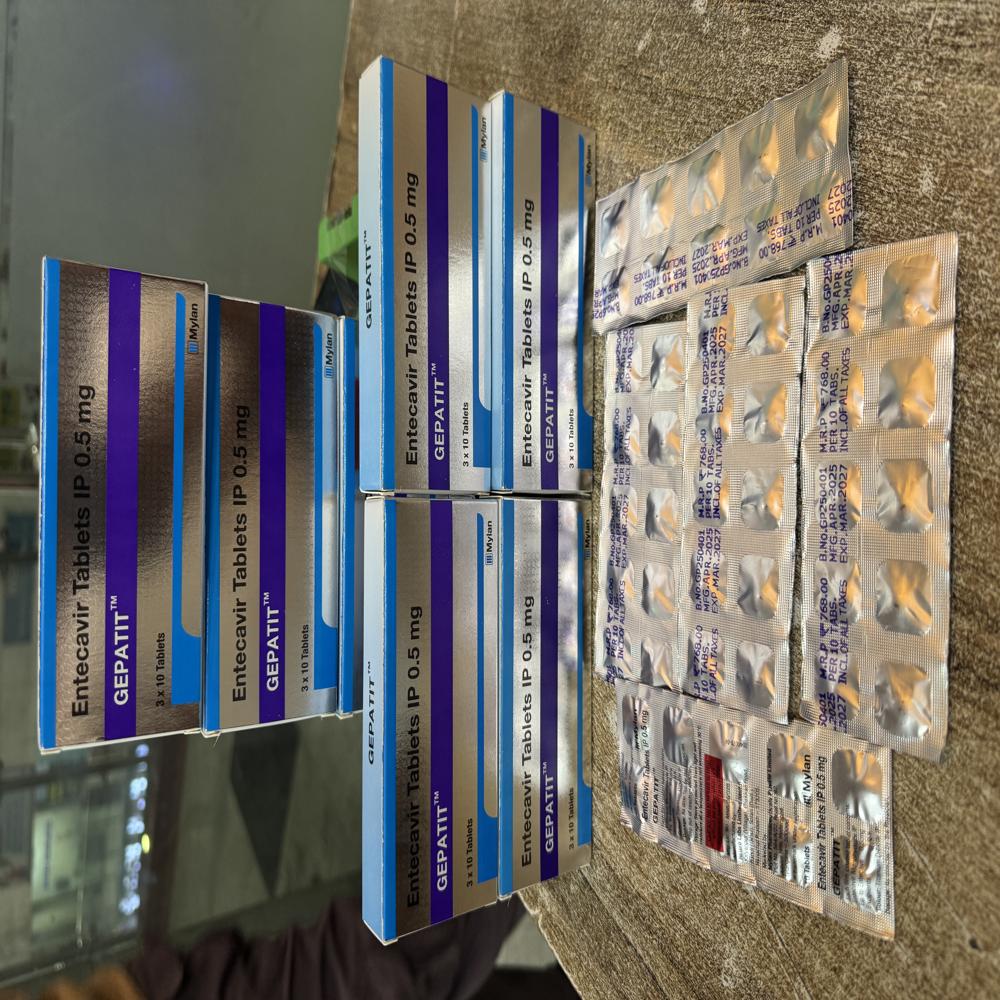
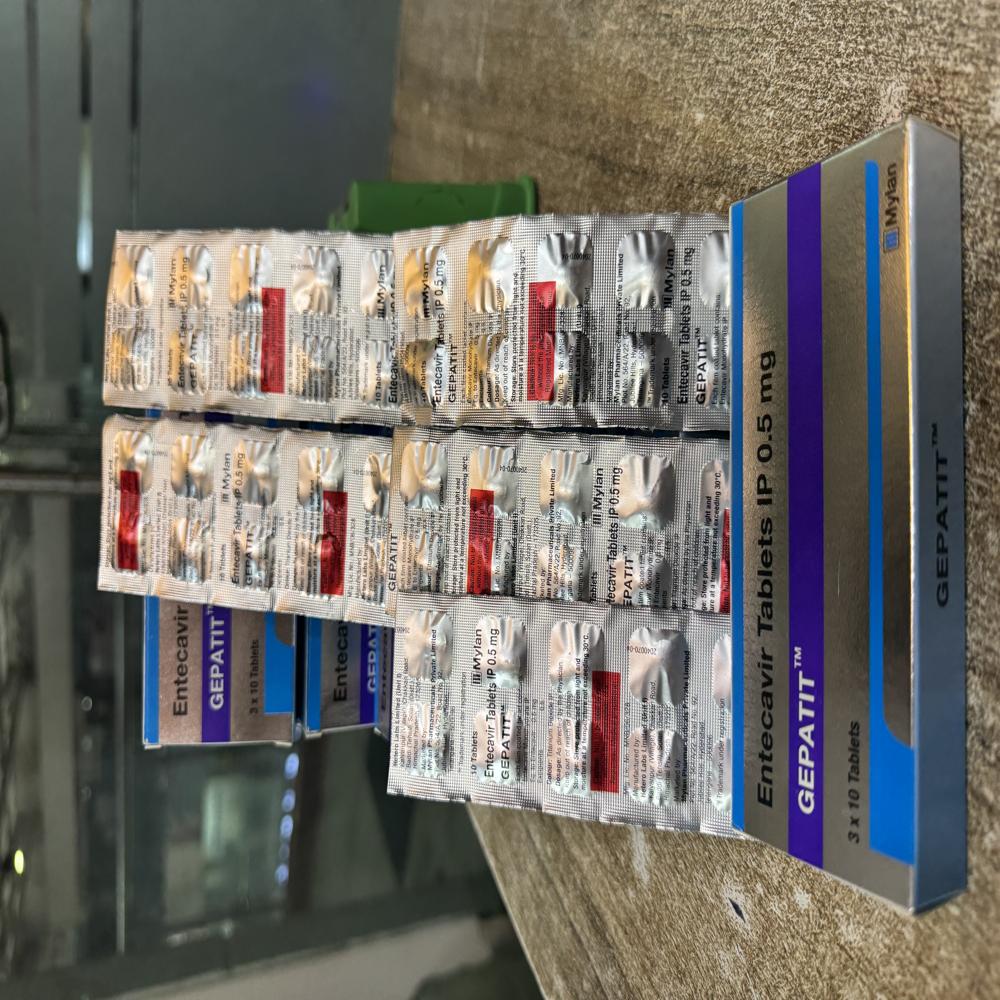
Gepatit 0.5 mg tablets contain the antiviral medication entecavir, which is used to treat chronic Hepatitis B virus (HBV) infection. It works by inhibiting a viral enzyme necessary for the virus to multiply, thereby reducing the amount of HBV in the body and slowing the progression of liver damage.
Key information
Active Ingredient: Entecavir (0.5 mg)
Form: Oral tablet
Manufacturer: Mylan Pharmaceuticals Private Limited
Indications (Uses): Treatment of chronic Hepatitis B infection in adults and children over two years of age who show signs of active viral replication and liver disease.
Action: Entecavir is a nucleoside analog that prevents the Hepatitis B virus from replicating by inhibiting the HBV polymerase enzyme. It does not cure Hepatitis B but helps control the infection.
How to take
Take Gepatit once daily, preferably on an empty stomach (either 2 hours before or 2 hours after a meal).
Swallow the tablet whole with a glass of water.
Do not stop taking the medication without consulting your doctor, as this can cause the infection to worsen.
Common side effects
Headache
Fatigue or extreme tiredness
Dizziness
Nausea and vomiting
Diarrhea or indigestion
Insomnia (difficulty sleeping)
Serious side effects
Rarely, Gepatit can cause more serious conditions. You should seek immediate medical attention if you experience symptoms of:
Lactic acidosis: This rare but potentially fatal condition is more common in overweight women. Symptoms include muscle pain, trouble breathing, and stomach pain.
Liver problems: Symptoms include yellowing of the skin or eyes (jaundice), dark-colored urine, light-colored stools, and severe stomach pain.
Important warnings
HIV coinfection: Patients with both HBV and HIV must take medication for both conditions simultaneously. Taking Gepatit alone could lead to HIV resistance.
Pre-existing conditions: Inform your doctor if you have kidney or liver problems, as dosage adjustments may be necessary.
Pregnancy and breastfeeding: Gepatit should not be used during pregnancy or breastfeeding unless specifically advised by a doctor after weighing the benefits and risks.
Alcohol: Avoid consuming alcohol, as it can increase the risk of liver damage.
Blood tests: Regular blood tests to monitor your liver function and viral load are necessary during treatment.

 Send Inquiry





 Send Inquiry

 Send Inquiry
 English
 Spanish
 French
 German
 Italian
 Chinese (Simplified)
 Japanese
 Korean
 Arabic
 Portuguese